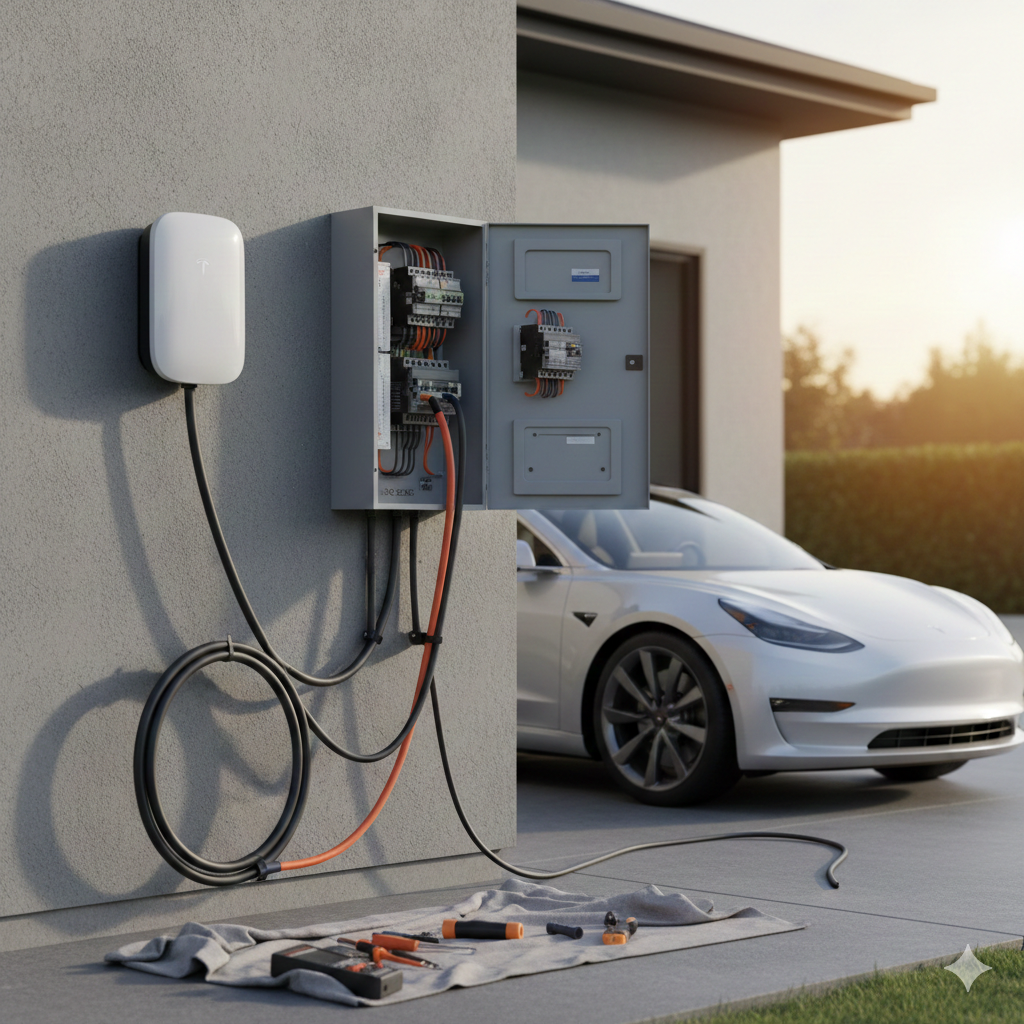
Looking for “EV charging station installers near me” means you want a safe, code-compliant installation that fits your site and budget. You can find certified local electricians who assess your electrical capacity, recommend the right Level 2 or commercial chargers, and perform code-compliant installations for homes, condos, fleets, or workplaces.
Start by focusing on station installers with local experience, proper licencing, and clear warranties so your charger works reliably and meets municipal rules. The rest of the article walks you through how to find vetted pros, compare quotes, and pick the installation that best matches your daily charging needs.
Finding Reliable EV Charging Station Installers Near Me
You should prioritize electricians with EV-specific experience, clear pricing, and a service area that includes your address. Verify licenses, read recent customer reviews, and confirm what’s included in the installation quote.
Local Certification and Experience
Check that the installer holds a state electrical license and, if available, manufacturer certification for the charger model you want. These certifications show the installer has completed required training and follows local electrical code.
Ask how many EV charger installs the company completed in the past 12 months and request references from recent local jobs. Proven experience reduces surprises like unexpected panel upgrades or permit delays.
Confirm the installer pulls required permits and schedules municipal inspections. Licensed contractors typically handle permitting, which protects your warranty and helps pass home resale inspections.
Comparing Installation Services
Compare written quotes that break down: labor hours, parts (circuit breaker, conduit, wiring), permit fees, and any panel or meter upgrades. A side-by-side comparison helps you spot low bids that omit essential work.
Look for included services such as site assessment, load calculation, charger mounting, network/configuration, and post-install testing. Ask whether they offer a dedicated 240V circuit, hardwired installation, or plug-in options.
Check warranty and support: verify electrical workmanship warranty length and whether the installer will troubleshoot charger network issues. Also confirm after-installation support hours and response time for service calls.
Service Area Coverage
Confirm the installer explicitly lists your city or ZIP code as within their regular service area. Some companies advertise “metro” coverage but charge travel fees for addresses beyond a defined radius.
Ask whether they subcontract work and, if so, request the subcontractor’s credentials. Subcontracting can affect consistency of workmanship and who handles follow-up service.
Finally, verify scheduling availability and typical lead times for site visits and installations in your neighborhood. Fast local response matters most when you need permit pulls or urgent electrical upgrades.
Choosing the Best EV Charging Station Installation
You should prioritize charger type, total installation cost, and code compliance when selecting an installer. Focus on how each option affects charging speed, circuit capacity, and long-term maintenance.
Understanding Different Charger Types
Level 1 uses a standard 120V outlet and typically adds 3–5 miles of range per hour. It’s best for overnight home charging if you drive under 30 miles daily and want minimal installation work.
Level 2 runs on 240V and delivers 10–60 miles of range per hour depending on the charger and vehicle. Choose a 40–48A hardwired unit for faster home charging, or a 32A plug-in if you want portability and lower electrician costs.
DC fast charging (DCFC) supplies 50 kW and above and can add 60–200+ miles in 20–40 minutes. It requires three-phase power or utility upgrades and suits commercial sites, apartment parking with high turnover, or fleet operations.
Match charger type to driving patterns, available electrical capacity, and budget. Confirm vehicle onboard charger limits to avoid overspending on unnecessary power.
Assessing Installation Costs
Installation ranges widely: minimal for Level 1 (often under $200 if no electrician work), moderate for Level 2 ($500–$2,500 typical), and high for DCFC (tens of thousands plus site work). Get three quotes that break out equipment, labor, permits, and utility upgrades separately.
Ask installers to itemize: panel upgrades, circuit breakers, conduit, trenching, metering or load management hardware, and permit fees. Check for available rebates or incentive programs that can cut hardware or labor costs by hundreds to thousands.
Factor ongoing costs: network subscription fees for smart chargers, electricity demand charges for commercial DCFC, and warranty or maintenance plans. Compare total cost of ownership over 3–5 years, not just upfront price.
Ensuring Safety and Compliance
Verify installers carry proper credentials: licensed electrician, EV-IT or manufacturer-specific certifications, and local municipality approvals. Confirm liability insurance limits and worker’s compensation coverage before work starts.
Ensure equipment meets standards: UL listing (or equivalent), NEC-compliant wiring, and any local code amendments. For multi-unit buildings, check for electrical load studies and written permissions from building management or strata councils.
Require written documentation: permit copies, inspection receipts, as-built wiring diagrams, and warranty terms. Plan for regular maintenance checks and a clear protocol for fault reporting and emergency shutdown.